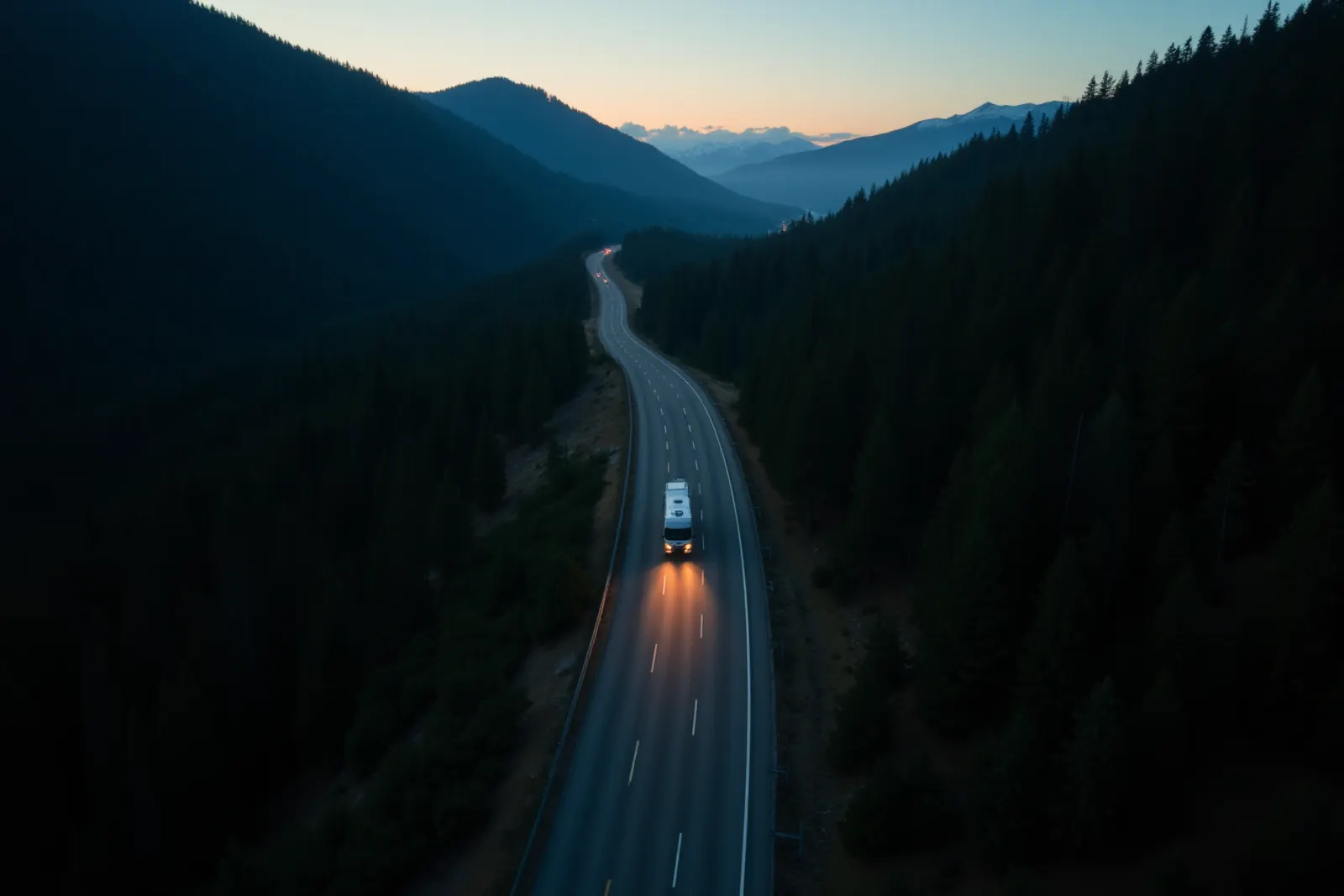
Mail is one of the few things full-time RV life doesn't automatically simplify. You still get bills, renewals, tax forms, and the occasional important letter — but there is no front-door mailbox to catch them. A deliberate combination of a mailing address, sender updates, and destination planning can make the logistics more manageable. Here are the decisions full-timers commonly work through.
This article explains common RV mail practices, not currently enabled EverAddress service. Do not route mail or packages until an activated account shows its exact address, supported items, actions, handling terms, and fees.
1. Choose a longer-term mailing address
Many RVers choose a virtual mailbox operated by a CMRA. A provider may assign a mailing address with a PMB and offer online review of checked-in items. Exact address format, supported mail, imaging, actions, timing, and fees depend on the provider and account.
One thing to separate in your mind from the start: your mailing address and your domicile are two different decisions. Where your mail lands is a logistics question; which state is your legal home is a separate legal one. We cover that inchoosing a state for your address.
2. Update eligible senders deliberately
Start with ordinary correspondents that accept a separate mailing address. Regulated institutions set their own rules, so confirm the address type they require before changing records such as:
- Banks, credit cards, and any brokerage or retirement accounts
- Vehicle and RV insurance, plus health and life insurance
- The DMV and vehicle registration (subject to your domicile choice)
- The IRS and your state tax agency
- Subscriptions, memberships, and roadside assistance
Keep a record of which senders accepted the mailing address and which require a residential, domicile, registered, or other address. A mail-receiving address is not universally accepted for regulated uses.
3. Decide scan-first, forward-when-needed
When a provider offers online check-in and the relevant action, a useful decision pattern is:
- Scan eligible documents you are authorized to open and need to read remotely.
- Forward eligible originals only after seeing the destination, carrier, handling, and total.
- Discard only through a confirmed, reversible-before-completion workflow.
Staff scanning is not instant. Ask how requests are queued, reviewed, published, and priced. Some providers offer consolidation; confirm eligibility, repacking rules, liability, and the final shipment price first. EverAddress does not currently offer a production forwarding or consolidation workflow.
4. Get packages to where you actually are
For a part or package on the road, confirm the receiving destination before ordering. Common options include:
- Your campground or RV park — check their package policy and how long they'll hold it.
- USPS General Delivery — a post office along your route holds it for pickup with ID.
- A store that holds packages — handy in areas without a convenient post office.
5. Stay ahead of renewals
The mail that hurts most to miss on the road is the time-sensitive kind: vehicle registration, RV insurance, your license, roadside membership. Tracking renewal dates as they arrive — and getting a reminder before each one can reduce surprises. The EverAddress demo includes fictional, pre-authored renewal examples; it does not analyze production customer mail or provide a live renewal service.
A mailing address makes your mail easy. It does not settle domicile, registration, licensing, or voter registration — those rules vary by state and are decisions to make deliberately. Confirm what your chosen state requires rather than assuming an address covers it.
- Choose a longer-term mailing address, then confirm each sender's address rules.
- Use scan, forwarding, or discard only when the provider shows that action and its terms.
- Confirm a campground, General Delivery, or pickup destination before ordering a package.
- Track renewal dates from original documents with a system you control.
- Keep domicile as a separate, deliberate decision.
Common questions
How do I receive a package while traveling in an RV?
Common options include a campground or RV park that confirms it will accept the item, USPS General Delivery at a participating post office, or a carrier or retailer pickup point. For an activated EverAddress account with package receiving enabled, eligible packages can be held in a locked office area at 462 Memory Lane, Suite 120, Dawsonville, GA 30534 for pickup Sunday–Friday, 9:00 a.m.–6:00 p.m.; closed Saturday. Carrier, item, size, storage, and fee rules are confirmed before activation. EverAddress does not currently promise package shipping or forwarding.
What's the difference between a mail service and choosing a domicile?
A mail service receives and handles your mail. Choosing a domicile is a separate legal decision about which state is your home for licensing, registration, taxes, and voting. A mailing address does not by itself establish domicile, and the rules vary by state — so treat them as two different tasks.
How does USPS General Delivery work for RVers?
General Delivery lets a post office hold mail for you to pick up in person. You address it to your name, 'General Delivery', the city, state, and ZIP of a post office that accepts it, and bring ID to collect it. It's handy for the occasional item, but it isn't a permanent address and not every post office offers it — call ahead.
Do I need a physical street address for my driver's license as a full-time RVer?
Many states require a physical address for a license, and how they treat a mail-service address varies. This is part of the domicile decision, not something a mailing address settles on its own. Check your chosen state's specific requirements before you rely on any address.
General information, not legal or tax advice. State and postal rules vary and can change.